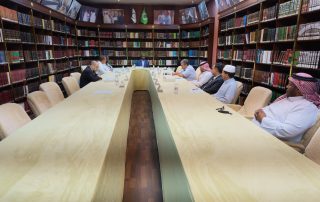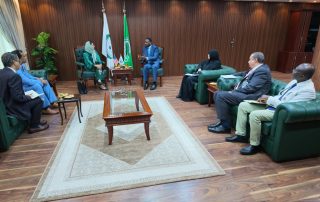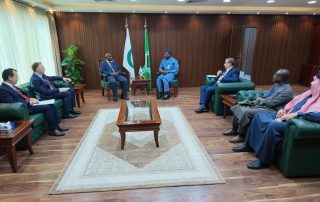
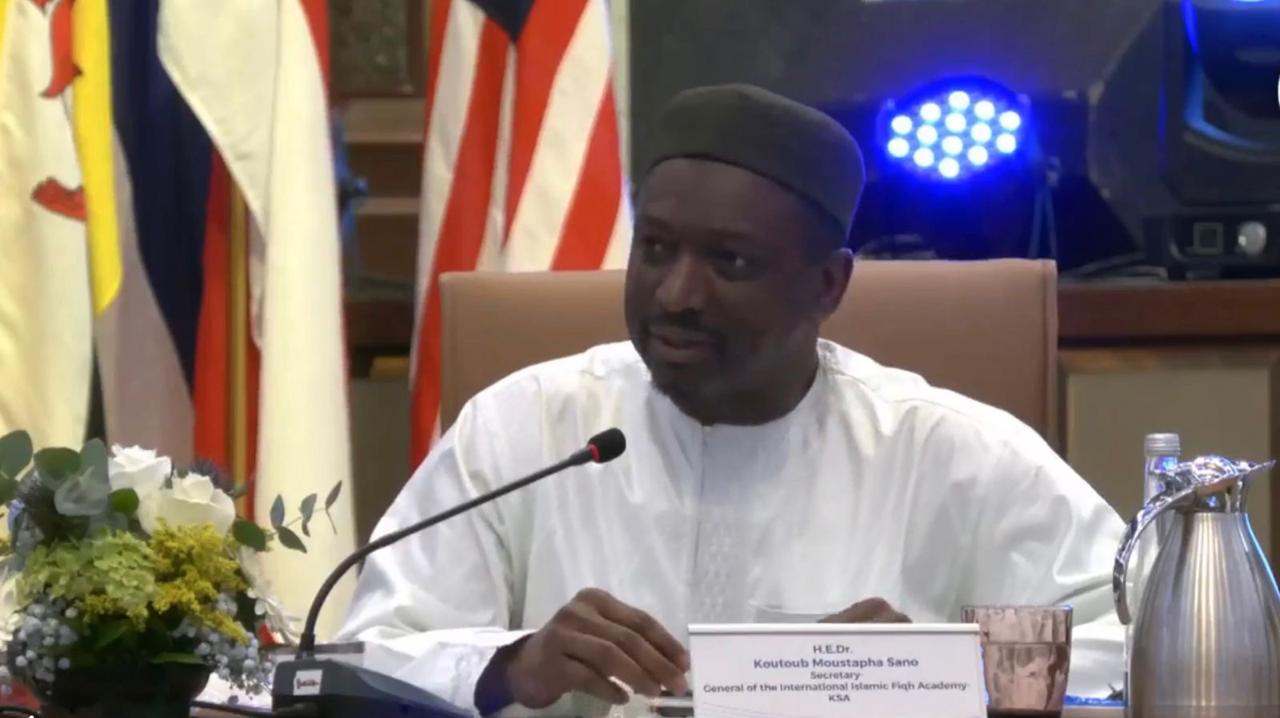
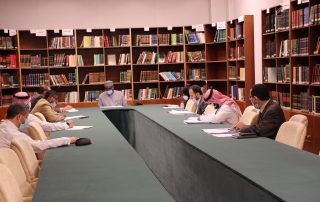
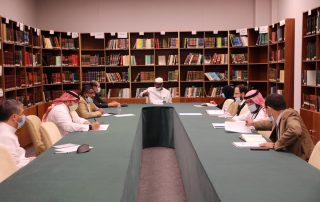
On Thursday, 5 Rabi’ al-Awwal 1447 AH, corresponding to August 28, 2025, His Excellency Prof. Koutoub Moustapha Sano, Secretary-General of the Academy, chaired a scientific session titled “Religious Diplomacy and Conflict Resolution.” This session was part of the Second Summit of Religious Leaders held in the Malaysian capital, Kuala Lumpur, organized by the Muslim World League in cooperation with the Department of Islamic Development under the Malaysian Prime Minister’s Office.
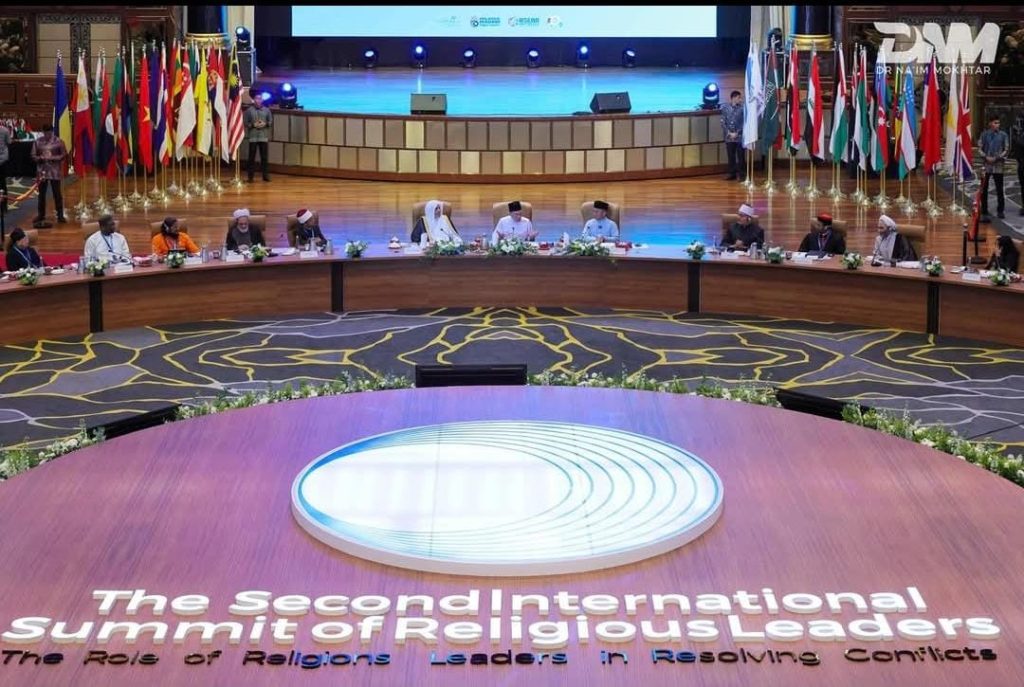
His Excellency began his speech by expressing sincere gratitude and appreciation to the Government of Malaysia and to His Excellency the Prime Minister, Mr. Anwar Ibrahim, congratulating him on his historic success in ending the war between Thailand and Cambodia. He also extended deep thanks to His Excellency Dr. Mohammad Abdulkarim Al-Issa, Secretary-General of the Muslim World League, for his tremendous efforts in organizing and ensuring the success of the summit.
In his opening remarks as chair of the session, His Excellency emphasized that while traditional diplomacy is important, it alone is insufficient to resolve the complex conflicts of the modern world. He stressed that religious diplomacy serves as a vital complement to political diplomacy, adding a deeper human and ethical dimension capable of reaching hearts and minds.
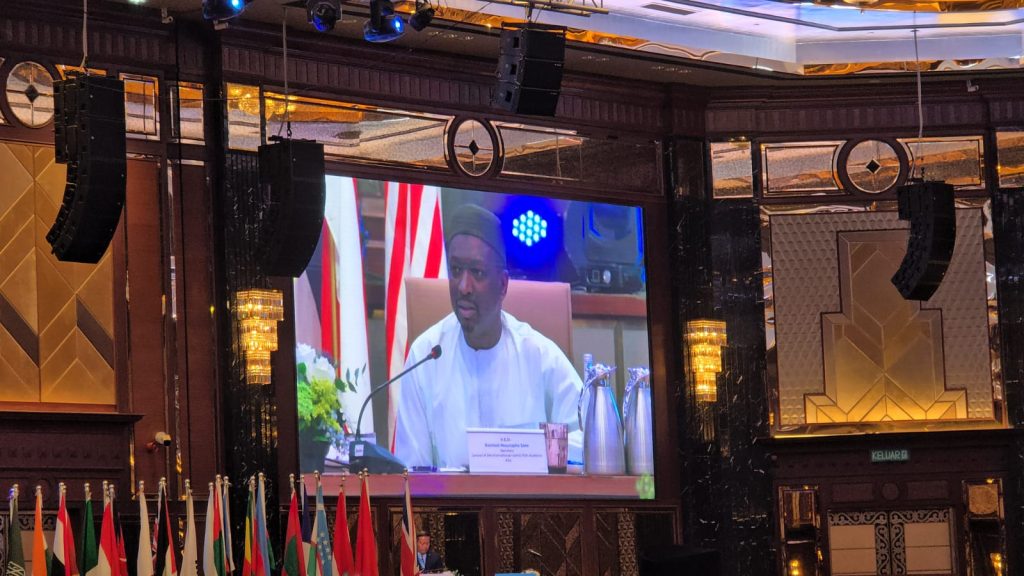
He explained that religious diplomacy is grounded in the shared moral values of religions and leverages the status of religious leaders to build trust and open channels of dialogue when politics fails to do so. He described it as “the diplomacy of conscience and spirit, capable of transforming religion from a tool of conflict into a bridge for closeness and harmony.”
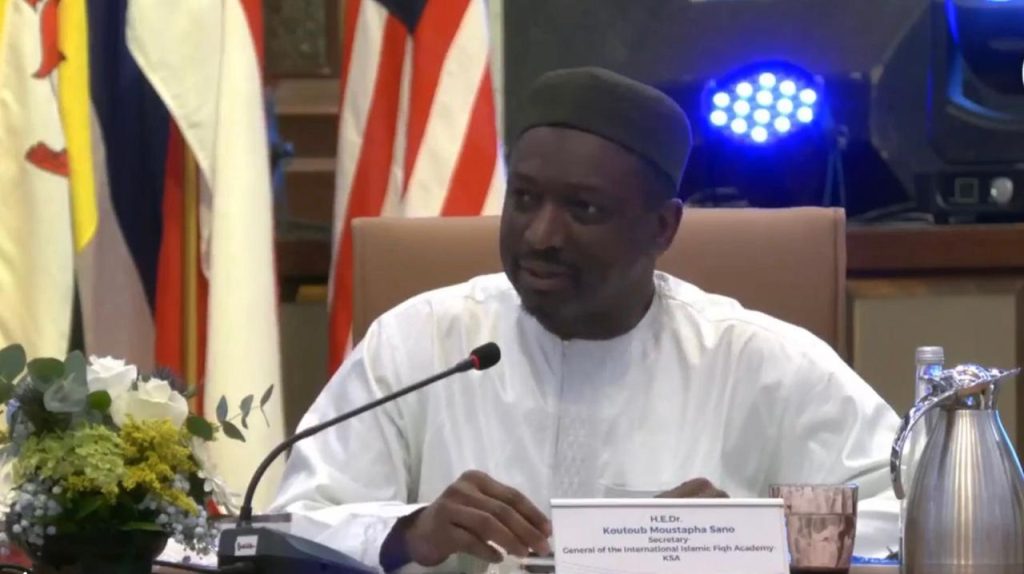
His Excellency highlighted the crucial role of religious leaders in preventing conflicts before they occur by promoting values of tolerance, understanding, cooperation, and solidarity, and combating extremism and fanaticism. He affirmed that these leaders also play a key role in resolving conflicts after they arise by reminding people of values such as mercy, justice, forgiveness, and integrity.
In this context, His Excellency stressed the need to protect religions and divine messages from being exploited by extremists and fanatics who attempt to hijack them to justify their crimes and violations. He pointed out that there is no connection between Judaism and the actions of extremist Zionist movements in Israel and occupied Palestine, including the killing of innocents and the starvation of Gaza residents in the name of Judaism. He affirmed that “Judaism is innocent of these acts, just as the wolf was innocent of the blood of Joseph.”
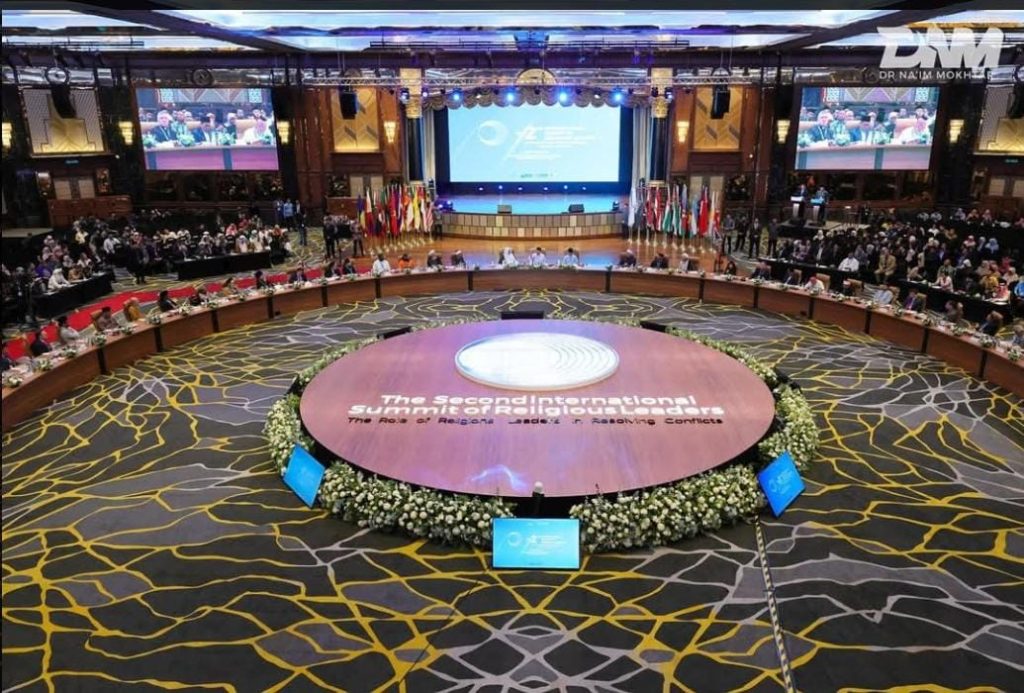
His Excellency also noted that the session would feature contributions from a distinguished group of scholars, researchers, and experts to discuss diverse perspectives and experiences on how religious diplomacy can be employed to resolve conflicts, whether within societies or between nations. He expressed hope that the discussions would yield practical recommendations that promote a culture of peace and pave the way for future initiatives that combine politics with ethics, and reason with conscience.
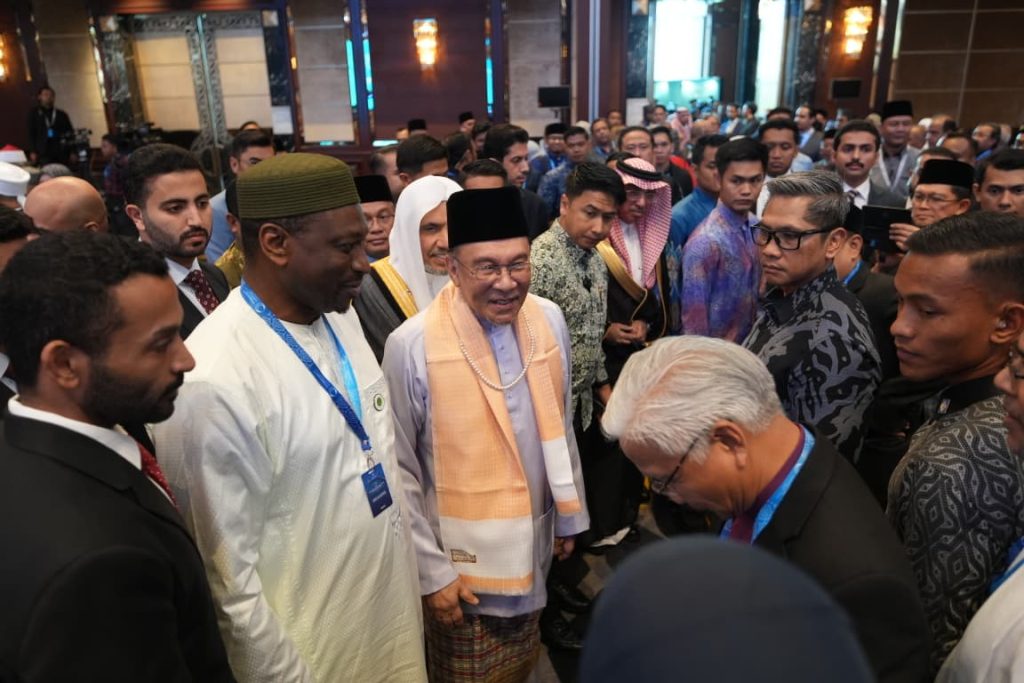
He concluded his speech by once again welcoming the participants and announcing the official opening of the session.
Read Also
Lastest