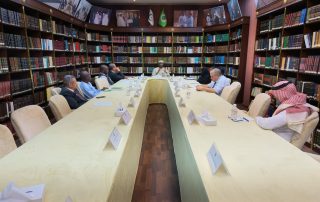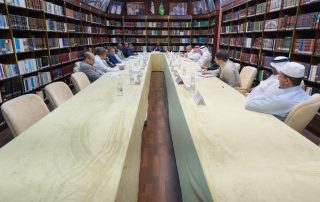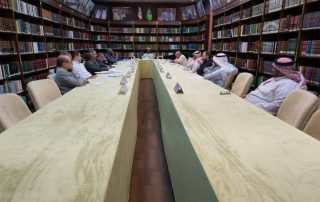

The Council of the International Islamic Fiqh Academy of the Organization of Islamic Cooperation, holding its twenty-sixth session in Doha, State of Qatar, on 6-10 Dhūl-Qi’dah 1446H (4–8 May 2025),
HAVING EXAMINED the research papers submitted to the Academy concerning Emerging Issues in Childcare,
HAVING LISTENED to the in-depth discussions on the subject,
RESOLVES
First: Confirmation of the Academy’s resolution no. 113 (7/12) on Rights of Children and Elders, and resolution no. 213 (9/22) on Rights of Persons with Disabilities in the Islamic Jurisprudence.
Second: Affirming that family, society, and the State bear religious, legal, and humanitarian responsibilities for child-caring and for preserving the child’s Islamic and national identity.
Third: It is obligatory to protect the child from anything that may lead to violating their sanctity and dignity, such as blackmail involving material or psychological threats and pressure, bullying as a form of physical and moral abuse, verbal, sexual, and cyber harassment, and all forms of violence.
Fourth: The legitimate right of parents to discipline their children does not constitute abuse or violence.
Fifth: It is obligatory to protect children during armed conflicts, wars, disasters, and in refugee and displacement settings.
Sixth: It is obligatory to safeguard the child’s gender identity to ensure the soundness of their human natural disposition (fitrah).
Seventh: It is obligatory to instill moral and ethical values in children to ensure their digital safety and to protect them when using digital (electronic) devices by avoiding suspicious websites, misinformation exchange, and the sharing of indecent images.
Eighth: Strengthening family, educational, and societal supervision when children use digital (electronic) devices.
Nineth: It is obligatory to care for persons with special needs, seek to integrate them into their communities, and provide an appropriate environment for that purpose.
RECOMMANDATIONS
1. Instilling and nurturing Islamic values and rituals in children and raising children to respect and honor them.
2. Developing a comprehensive and integrated Islamic strategy on childhood for Islamic countries to consider in their local legislations.
3. Preparing educational and guidance manuals for all groups working in the field of child protection and care, and to raise awareness of the child’s rights well-established in religion and by the state.
4. Providing material provisions and training by establishing dedicated endowments (awqaf) for persons with special needs.
5. Holding workshops in Muslim communities to educate parents on how to address childhood challenges in a way that preserves the religious identity, reinforces natural human disposition, protects the child’s human dignity, and promotes it.
6. Organizing specialized symposia on child protection during disasters and armed conflicts.
Indeed, Allah is All-Knowing.
Read Also

Lastest