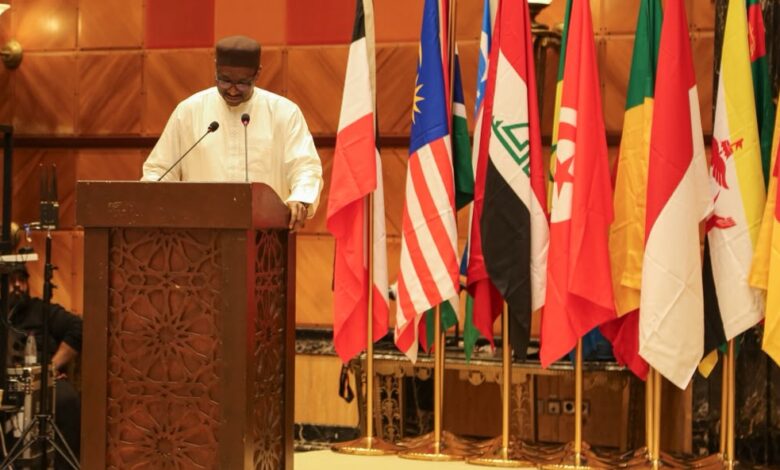
H.E. Prof. Dr. Koutoub Moustapha Sano, Secretary General of the International Islamic Fiqh Academy (IIFA), affirmed that violence in all its forms and manifestations, whether traditional or contemporary, is prohibited in Islam. He stressed that interpretations of certain religious texts used to justify violence against women result from extracting those texts from their proper contexts and disregarding the objectives and higher purposes of Islamic law.
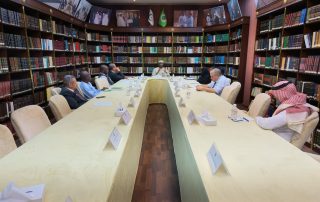
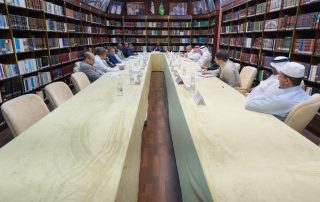
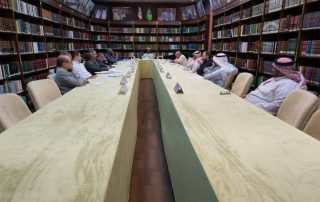
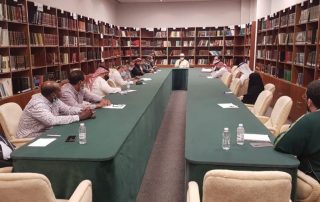
He made these remarks during the International Seminar on “The Role of Religious Leaders in Combating Violence Against Women,” organised by the International Islamic Fiqh Academy in cooperation with the Muslim World League on Monday, 7 September 2026, in Jeddah.
Prof. Sano explained that the seminar is part of ongoing efforts to promote awareness of women’s empowerment issues and to correct many misconceptions surrounding women’s rights, particularly those related to violence. He emphasised that Islam prohibits all forms of harm inflicted upon women, whether they are mothers, daughters, sisters, or wives.
He noted that violence inherently entails harshness, abuse, and injury, all of which contradict the natural disposition (fitrah) upon which Allah created humanity. He added that any form of aggression against women, including physical assault, verbal abuse, harm, or exploitation, constitutes an assault on human dignity and on the innate honour that Allah has bestowed upon all human beings.
The Secretary General stressed the importance of understanding Qur’anic texts relating to women within their complete context and cautioned against isolating verses from their broader textual and legal framework. He explained that references to darb (striking) mentioned in certain texts cannot be used as a basis for justifying violence or physical abuse.
He further clarified that what some jurists have described as non-injurious disciplinary striking does not entail causing harm, injury, fractures, wounds, or leaving any mark on the body. Nor may it involve striking the face, humiliation, degradation, or any form of disfigurement.
Prof. Dr. Sano emphasised that the misuse of certain religious texts by detaching them from their contexts and objectives not only harms women but also misrepresents Islam and the Sunnah of the Prophet Muhammad (peace and blessings be upon him), who is the supreme example of mercy, compassion, and good treatment, and who never struck a woman.
He stated that following the Prophet’s tradition requires adherence to his model of mercy, kindness, and respectful conduct. He underscored that a woman subjected to violence is at the same time someone’s mother, sister, daughter, or wife, and therefore respecting and safeguarding her dignity is a moral, religious, and humanitarian responsibility.
Prof. Sano also pointed out that the Prophet’s saying, “None of you truly believes until he loves for his brother what he loves for himself,” constitutes a comprehensive principle governing good treatment and the preservation of human dignity. He explained that the seminar seeks to correct misconceptions, reaffirm Islam’s clear stance against violence toward women, and demonstrate that any ambiguity surrounding the issue stems from human interpretations that lack a sound foundation.
He emphasized the necessity of confronting all practices that degrade women’s dignity or cause them harm, noting that the effects of violence extend far beyond the individual victim. Such harm affects the family and society as a whole, undermining family stability and cohesion, negatively influencing the upbringing of children, and threatening social security and stability.
In conclusion, the Secretary General of the International Islamic Fiqh Academy reiterated that Islam is unequivocal in safeguarding women’s dignity and protecting them from harm. He called for strengthening religious awareness and correcting misconceptions in ways that contribute to protecting families and promoting the values of mercy, respect, and good conduct.
Read Also
Lastest