
In the Name of Allāh,
the Entirely Merciful, the Especially Merciful
Praise is due to Allāh, Lord of the worlds, may the blessings and peace be upon our master Muḥammad, the last of prophets, on his family, and all his companions.
Resolution No. 234 (5/24)
Achieving Food and Water Security, Most Critical Problems and their Effects on the Future Challenges of the Ummah
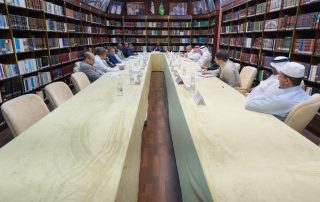
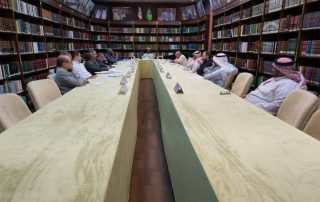
The Council of the International Islamic Fiqh Academy of the Organization of Islamic Cooperation, holding its 24th session in Dubai, United Arab Emirates, on 7–9 Rabīʿ al-Awwal 1440h (4–6 November 2019),
Having examined the research papers submitted to the Academy concerning Achieving Food and Water Security, Most Critical Problems and their Effects on the Future Challenges of the Ummah,
Having listened to the in-depth discussions on the subject,
Resolves
First: water security means the supply of safe water for human use, enough to meet the country’s needs in quantity and quality and to ensure its continuity without interruptions.
Second: food security means providing people with safe and healthy food while ensuring the minimum nutritional needs of all members of society.
Recommendations
As Islam calls for the preservation and economy of water and food and pro- hibits excess and waste in everything that harm humans and societies, the Academy recommends the following:
- Governments of Muslim countries should prioritize water and food se- curity and develop policies and programs to rationalize water and food
- As dictated by Shariah, Muslims should save water and food and not waste them.
- Scientists specialising in hydrology, agriculture, and the environment should strive to establish devices and find solutions to ensure water and food They should also take advantage of techniques provided by the fourth industrial revolution in water recycling, in accordance with the
regulations and rulings of Shariah.
- Muslim countries have to urgently cooperate to solve problems related to water and food shortages by establishing appropriate policies and plans to ensure developing water resources and achieving food security. They should also cooperate with regional as well as international organizations specialized in water and food areas.
- Use modern seed production techniques and improve agricultural de- velopment equipment to ensure higher production rates and to achieve food
- Muslim countries should endeavor to benefit from Shariah teachings and regulations in regard to developing agricultural resources by following the doctrine of the restoration of infertile soil, as advocated by Shariah teachings and They should also endeavor to remove obstacles to its realization.
Indeed, Allāh is All-Knowing.
Read Also

Lastest