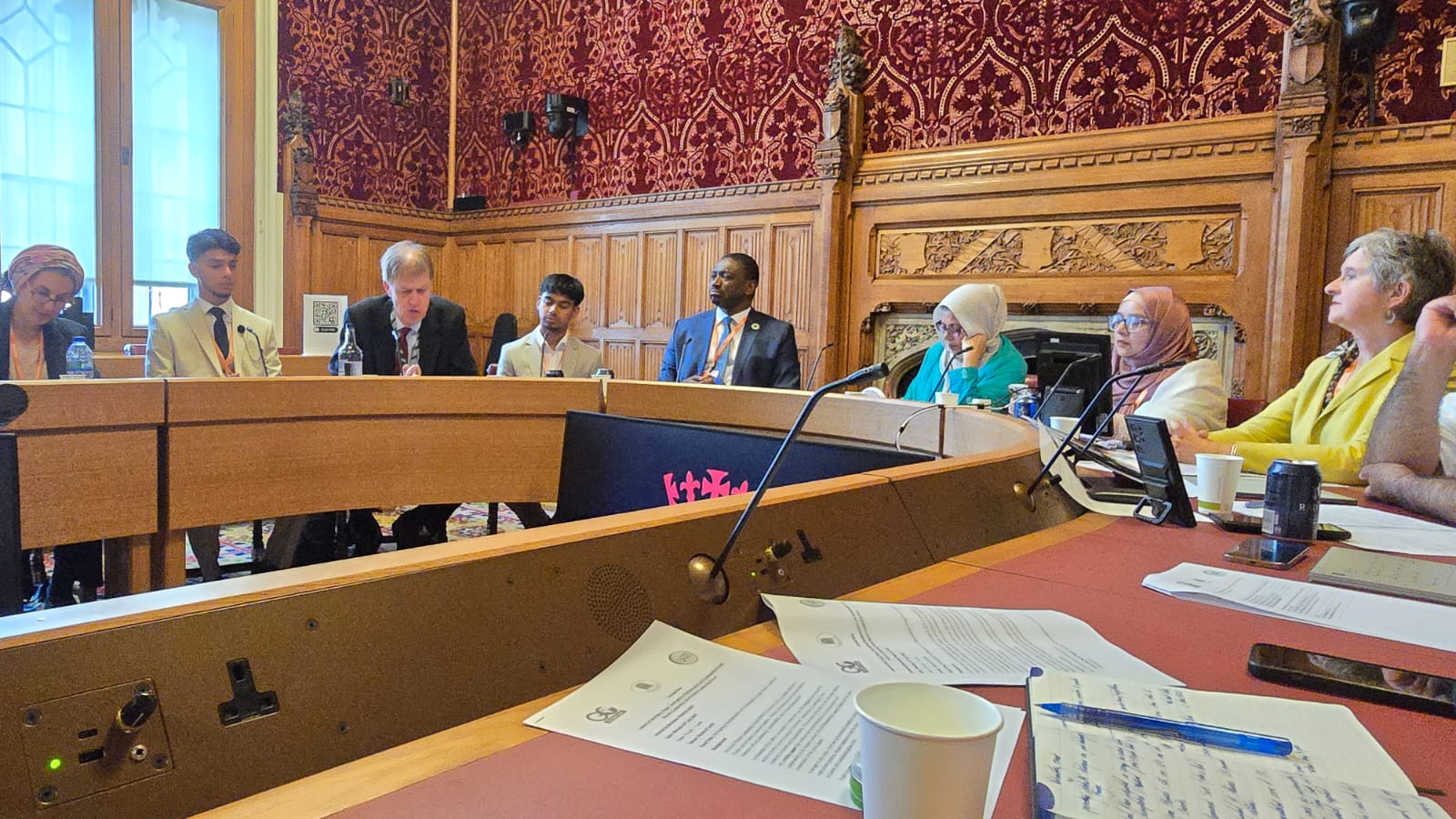
During his official visit to the United Kingdom, H.E. Prof. Koutoub Moustapha Sano, Secretary General of the International Islamic Fiqh Academy, delivered a keynote address at the British House of Lords during the launch of the policy paper on pluralism and sustainability on Monday, 19 Muharam 1447, corresponding to 14 July 2025.
His Excellency began his speech by emphasizing the historical symbolism of this venerable council as a beacon of freedom, democracy, and the rule of law. He conveyed greetings from Muslim scholars and thinkers worldwide—members and experts of the International Islamic Fiqh Academy, the leading religious authority for the OIC’s 57 member states. He also expressed gratitude to Mrs Cecille El Beleidi, British Consul General in Jeddah, and Prof. Husni Ahmed for their efforts in promoting interfaith dialogue and comprehensive development, as well as their prominent role in organizing this event.
The Secretary General of the Academy then spoke about pluralism as an imperative to confront the crises of our time, clarifying that the issue of pluralism and sustainability is not merely a temporary slogan but an existential necessity in a world rife with conflicts and environmental degradation. He emphasized that humanity urgently needs to establish a common ethical foundation to address contemporary challenges and upheavals by harnessing the role of religions as binding moral frameworks rooted in human conscience, transcending their traditional function as mere spiritual guidance.
His Excellency highlighted in his speech the failure of unilateral approaches in addressing global divisions and conflicts, noting that experience has proven the inability of a single power or ideology to guarantee peace, safeguard human dignity, or achieve equitable development on its own. Therefore, he called for the formulation of a new global ethical charter based on cooperation and justice, guided by insight and compassion, and inspired by our shared humanity.
His Excellency emphasized that religious traditions urge humanity to transcend ego and narrow competition, elevating instead the values of mercy, solidarity, and peace. He asserted that a just, pluralistic world order based on cooperation and moral responsibility is no longer merely a strategic choice but the sole existential path to confront the complex crises of our era.
Regarding Islamic values and the principles of Islamic jurisprudence (Fiqh) in establishing pluralism, His Excellency explained that, from an Islamic perspective, pluralism is grounded in a system of binding divine values that elevate human dignity. He highlighted several supreme Islamic values that form an ethical framework for pluralism, including:
- Mercy (Rahma): A value encompassing all creation, as stated in the Quran: “My mercy encompasses all things” Al-A’raf 7:156. He affirmed that Sharia considers mercy as the foundation of human relations.
- Justice (Adl): Filling the heart of ethical governance, justice mandates fairness, accountability, and the protection of rights. The Quran states: “O you who believe, stand firmly for justice as witnesses to Allah, even if against yourselves…” An-Nisa 4:135, indicating the universality and obligation of justice.
- Solidarity (Tadhamun): Enjoining cooperation in righteousness and piety while prohibiting sin and aggression, in accordance with the verse: “Cooperate in righteousness and piety, and do not cooperate in sin and aggression” Al-Ma’idah 5:2. This value calls for upholding shared good and rejecting oppression.
- Consultation (Shura): Elevating broad participation and collective decision-making based on mutual respect and collective wisdom, as affirmed by the Quran: “And consult them in the matter” Aal Imran 3:159. Consultation ensures pluralism in decision-making.
- Stewardship/Sustainability (Istikhlaf/Istidama):Acknowledging our collective responsibility to develop and preserve the earth for future generations, based on the verse: “I will make a successor (Khalifa) upon the earth” Al-Baqarah 2:30. Humans, as “vicegerents,” are responsible for sustainable development and environmental care.
- Human Dignity (Karama): He affirmed that Islam honors all humans without discrimination based on origin, religion, or culture, citing the verse: “We have honored the children of Adam” Al-Isra 17:70. Protecting human dignity is a shared moral goal among religions.

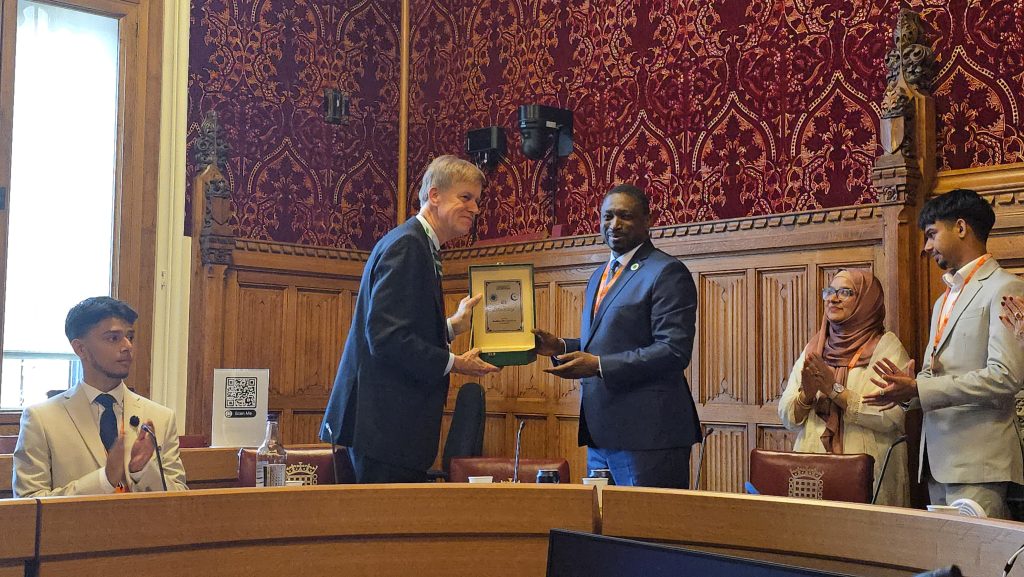
His Excellency explained that these higher values are supported by overarching jurisprudential (Fiqh) principles that frame pluralism as a moral obligation, including: “Harm must be eliminated”—mandating collective effort to avert threats to public health, the environment, and global security; “Public interest takes precedence over private interest.””Wherever there is benefit, there is the law of God.” “The ruler’s actions are tied to public welfare.” Then, he also stated that all these principles impose shared societal responsibility toward transnational crises. Accordingly, he stressed that pluralism disciplined by public interest is not only permissible under Sharia but religiously obligatory, citing the well-known juristic principle: “That without which an obligation cannot be fulfilled is itself obligatory.”
His Excellency also noted that Islamic Sharia upholds five Maqasid (Higher Sharia Objectives), which form the ultimate goals of Islamic legislation, including the preservation of religion, the preservation of the self (nafs), the preservation of intellect, the preservation of lineage, and the preservation of wealth. He argued that integrating these objectives into the structure of international cooperation would provide an ethical compass to address the roots of injustice, conflict, war, and environmental degradation. The observance of these objectives by policymakers would ensure that no one is left behind in security, stability, and prosperity, making the slogan “Leave no one behind” a tangible reality.
On sustainability, His Excellency defined it as “the ability to meet present needs without compromising future generations’ ability to meet theirs.” It balances environmental protection, economic growth, and social justice to ensure human flourishing and the preservation of the planet for future generations. He addressed the global commitment to “Leave no one behind” in the proposed policy paper, clarifying that it is not merely a developmental goal, but a moral imperative—a profound call to listen to the marginalized, defend the oppressed, and amplify the voices of the forgotten.
His Excellency stressed that no place is more deserving of this global call than Gaza, which endures bombardment, killing, starvation, and destruction. He described the situation in Gaza as an ongoing humanitarian catastrophe, condemning the systematic injustice faced by Palestinians as a deafening moral failure of the international community. Homes, schools, and lives are destroyed in broad daylight before a world that remains suspiciously silent, while women, children, and the elderly suffer “unprecedented historical” agony—a blatant challenge by occupying forces to international law and humanitarian principles. He urged the British Parliament to bear its moral and historical responsibility in demanding a just, comprehensive solution to the Palestinian-Israeli conflict—one based on international law, UN resolutions, justice, and shared humanity. Such a solution, long overdue, would not only bring peace to a people exhausted by suffering but also restore trust in the pluralistic world order.
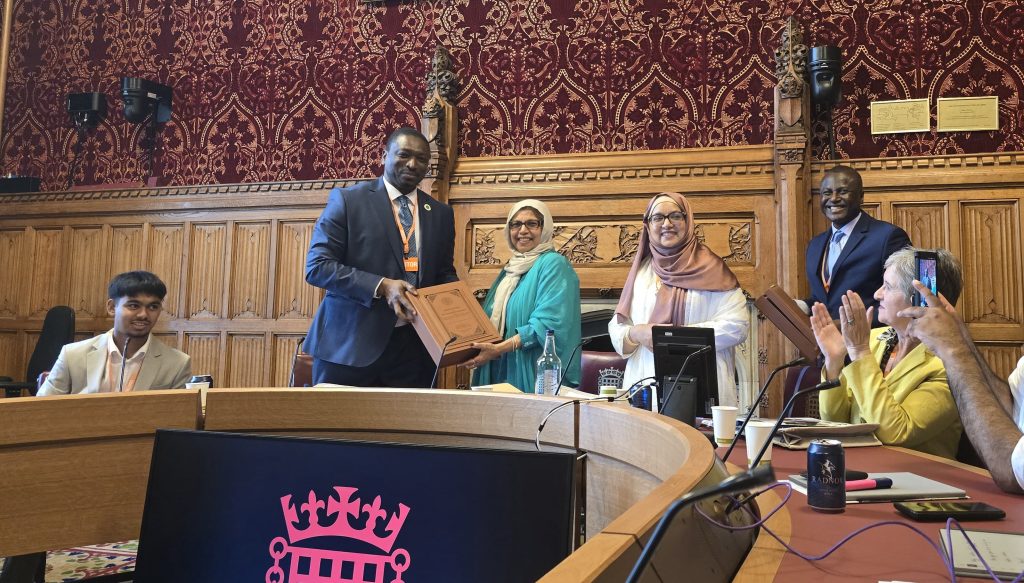
In conclusion, His Excellency reaffirmed the International Islamic Fiqh Academy’s steadfast commitment to these values in all its resolutions and recommendations. As a global juristic body representing 57 OIC member states, the Academy shoulders the responsibility of providing effective Sharia-based solutions to contemporary global challenges—from biotechnology and AI to economic justice and environmental protection—all rooted in the higher objectives of Sharia.
His Excellency noted that the Academy—trusted by over 1.9 billion Muslims worldwide—is a leading global authority in promoting moderation, tolerance, and respect for religious, cultural, and civilizational diversity. It has established numerous partnerships, including with the Islamic Cultural Centre (London), the University of Birmingham, and the historic Regent’s Park Mosque (also known as the London Central Mosque) in the UK, to promote moderation, counter extremism, and foster peaceful coexistence through education, dialogue, and community engagement.
In his final remarks before the House of Lords, His Excellency asserted that pluralism grounded in ethical values and responsible sustainability is the most effective path to resolving the complex crises of our time. He called for concerted international efforts based on shared human values to ensure a more just and peaceful world for all—where no one is left behind.
Read Also
Lastest