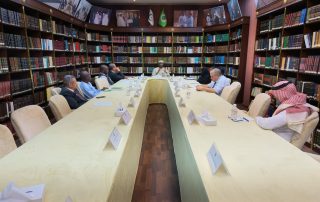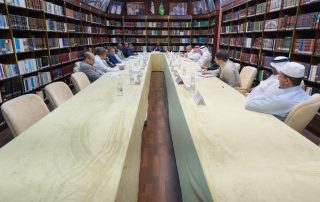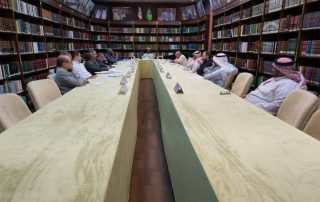

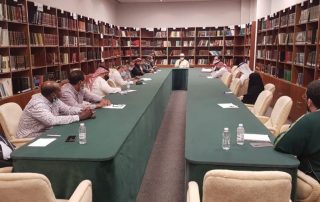
The Council of the International Islamic Fiqh Academy of the Organization of Islamic Cooperation, holding its twenty-sixth session in Doha, State of Qatar, on 6-10 Dhūl-Qi’dah 1446H (4–8 May 2025),
HAVING EXAMINED the research papers submitted to the Academy concerning Istishāb (Legal Presumption of Continuity) and Its Applications in Contemporary Issues and Emerging Matters,
HAVING LISTENED to the in-depth discussions on the subject,
RESOLVES
First: Istishāb is affirming a ruling on a certain matter in a subsequent time based on its ruling in a previous time, in the absence of evidence requiring any change.
Second: Istishāb is a legitimate legal evidence which does not create a new ruling but affirms the continuity of a previous ruling.
Third: A jurist derives the ruling of a given case through Istishāb, whether in affirmation or negation. If there is doubt about its cessation, the presumption is that it remains; and if there is doubt about its existence, the presumption is its non-existence.
Fourth: Istishāb holds significant importance in juristic reasoning (ijtihād) across many contemporary issues, including acts of worship, financial transactions, personal matters, Islamic policy, the judiciary, and other aspects of life.
Fifth: Conditions for applying Istishāb:
1. The jurist must be reasonably certain that there is no evidence or cause negating the original state being presumed to continue, after exerting full effort in investigation and research.
2. Observance of the general and specific objectives (maqāsid) of the Shari’ah, as adherence to these objectives in all their forms is obligatory; they are the purposes and goals for which the rulings were legislated.
3. Like other sources of Islamic legal evidence, istishāb may only be applied to actual cases by those qualified for ijtihad, who are well-versed in the principles of legal derivation and who apply due diligence in verification and deliberation.
Indeed, Allah is All-Knowing.
Read Also

Lastest