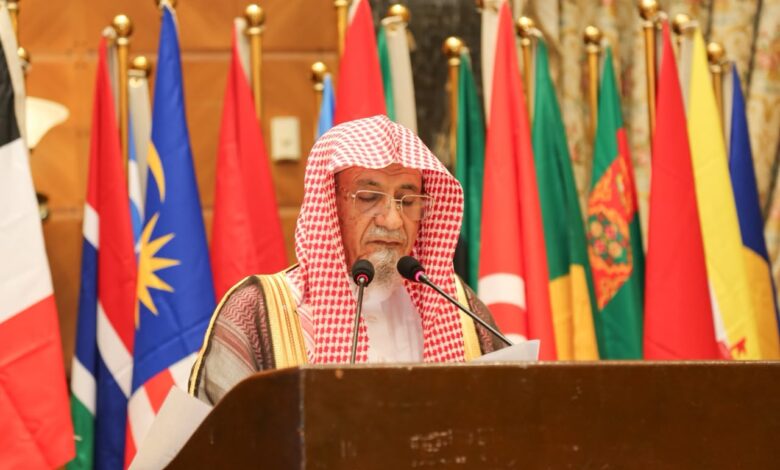
H.E. Sheikh Dr. Salih bin Abdullah bin Humaid, President of the International Islamic Fiqh Academy (IIFA), Imam and Khatib of the Grand Mosque of the Holy City of Makkah, and Member of the Council of Senior Scholars of the Kingdom of Saudi Arabia, affirmed that Islamic law has established human life upon the foundation of justice, linked the well-being of societies to the soundness of the family, and made the protection of human dignity, rights, and welfare among the foremost objectives of the Sharia.
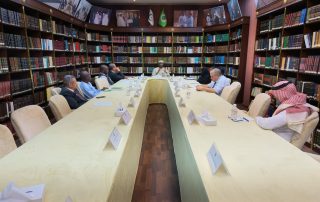
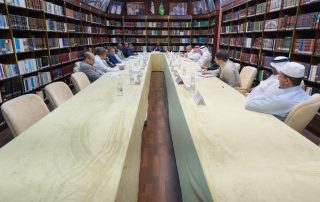
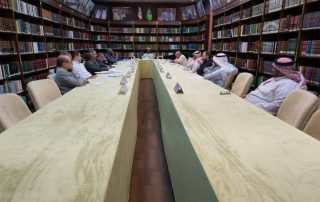
He made these remarks during the International Seminar on “The Role of Religious Leaders in Combating Violence Against Women,” organized by the International Islamic Fiqh Academy in cooperation with the Muslim World League on Monday, 7 September 2026, in Jeddah.
Dr. Bin Humaid explained that discussions on violence against women should be approached in light of the principles of Islamic law and the guidance of divine revelation, distinguishing between injustice, which Allah has prohibited, and the legal rulings established upon wisdom, benefit, and justice. He noted that the Holy Qur’an strongly condemns harming or mistreating women.
He emphasized that Islam does not view women as beings devoid of rights. Rather, caring for them and safeguarding their rights is regarded as an act of piety. He pointed to the Prophet’s saying: “O Allah, I declare inviolable the rights of the two vulnerable groups: orphans and women,” as well as his Farewell Pilgrimage instruction: “Fear Allah concerning women, for you have taken them as a trust from Allah and made them lawful to yourselves by the word of Allah.”
The President of the Academy stressed that, within the Muslim family, a woman is neither an object to be exploited nor a right to be neglected. She is a trust, a responsibility, and a partner bound by the solemn covenant of marriage. Consequently, any unjust physical abuse, insult, humiliation, financial oppression, arbitrary confinement, or violation of established rights constitutes prohibited injustice that cannot be attributed to Islam or justified in the name of Sharia.
He highlighted the importance of correcting misconceptions that have emerged in contemporary discourse on violence against women, particularly when certain terms and definitions are imported from international frameworks and conventions and then applied to Islamic legal rulings without due regard for the differing foundations and references upon which those definitions are based.
Shaikh Dr. Bin Humaid explained that the issue is not opposition to combating violence and injustice. Rather, the concern lies in expanding the definition of violence to include every difference in roles or legal rulings, or treating every legitimate distinction between men and women as a form of prohibited discrimination.
He clarified that Islamic law does not seek to abolish the natural and functional distinctions between men and women, nor does it regard differences in responsibilities as indicators of superiority in human dignity. Men and women are equal in their essential human dignity and moral accountability, although certain rulings and responsibilities differ according to wisdom, nature, and social obligations.
Addressing the concept of qiwamah (guardianship and responsibility within the family), he emphasized that it is neither domination nor unrestricted authority. Rather, it is a responsibility involving financial support, care, protection, and accountability. Citing the Qur’anic verse, “Men are caretakers of women because Allah has given some of them advantages over others and because they spend of their wealth,” he explained that whenever qiwamah becomes oppression, it ceases to reflect its true Islamic meaning. Likewise, when responsibility turns into tyranny, the person entrusted with it has betrayed the trust for which he will be accountable before both God and the law.
Regarding marital guardianship (wilayat al-nikah), Dr. Bin Humaid noted that portraying it as a denial of a woman’s legal capacity misrepresents Islamic law. Guardianship was prescribed to protect rights and prevent harm and exploitation, while simultaneously affirming a woman’s right to consent, choose her spouse, and refuse any marriage she does not accept.
He also stated that Islamic teachings concerning modesty, chastity, and the protection of honor should not be viewed separately from their purposes and social benefits and then portrayed as restrictions on women. Rather, these teachings seek to preserve women’s dignity, protect society from exploitation and abuse, and encourage modest conduct among all members of society.
Addressing the issue of disciplinary measures in cases of marital discord (nushuz), he stressed that the topic must not be discussed apart from its Qur’anic and juristic context or used as a justification for domestic violence. The Qur’an, he explained, does not present it as an unrestricted right for husbands but rather mentions it within a highly specific framework and after a sequence of graduated measures. Furthermore, Prophetic teachings and Islamic jurisprudence place clear restrictions that prevent it from becoming an act of aggression or revenge.
He noted that the Sunnah prohibits severe beating, striking the face, or targeting areas that could cause injury. The objective is not harm or pain but the expression of serious disapproval within an extremely limited and exceptional framework.
Dr. Bin Humaid further emphasized that the highest Prophetic example is not the use of such measures, but avoiding them whenever possible through kindness, patience, tolerance, and good treatment. He cited the Prophet’s statements: “Do not strike the female servants of Allah,” and “Those who do so are not the best among you.”
He also recalled the testimony of Aisha (may Allah be pleased with her), who said: “The Messenger of Allah never struck anything with his hand, neither a woman nor a servant, except when fighting in the cause of Allah.” He affirmed that this Prophetic example is the lens through which all related texts should be understood, far removed from selective readings, exaggeration, or attempts to justify injustice.
The President of the Academy stressed that Islam established marriage not as a field of conflict but as a relationship founded upon tranquility, affection, and mercy. He cited the Qur’anic verses: “And among His signs is that He created for you spouses from among yourselves that you may find tranquility in them, and He placed between you affection and mercy,” and “Live with them in kindness.”
He explained that living together in kindness is not merely a phrase but a moral commitment reflected in conduct, patience, chivalry, and good character. The Prophetic Sunnah encourages gentleness, understanding of human nature, winning hearts, and exercising patience toward human shortcomings.
Dr. Bin Humaid pointed to the Prophet’s statement: “The best of you are those who are best to their families, and I am the best of you to my family.” He observed that while a person may display good manners in public, the true test of character appears within the home, where there is neither pretense nor formality.
He stressed that, in Islamic law, the home is not an arena for demonstrating power but a place of tranquility, mercy, and moral excellence. True strength, he said, lies not in the ability to harm others but in the ability to control oneself.
The President reaffirmed that Islamic law is free from every form of injustice committed in its name, just as it is free from attempts to make its definitive rulings victims of imported concepts that disregard the unique foundations of the Islamic worldview.
He stated: “Just as defending women must not become a pretext for undermining the family, defending the family must never become a pretext for oppressing women.” He added that injustice cannot be remedied through another form of injustice, nor deviation corrected by further deviation.
Dr. Bin Humaid called for assessing Islam’s position on women through the guidance of revelation, the example of the Prophet (peace be upon him), and the objectives of Sharia, rather than through the mistakes of some Muslims, cultural practices that contradict Islam, or imported assumptions that classify every departure from a particular cultural model as violence or discrimination.
He stressed that scholars and religious leaders bear a profound responsibility in this regard, especially in issues where Islamic rulings become intertwined with social customs and where religious, cultural, and legal references overlap. Society, he said, needs a well-grounded scholarly voice that combines firm adherence to Islamic principles with an informed and balanced engagement with contemporary realities.
He emphasized that religious leadership must neither remain silent in the face of genuine injustice occurring in some homes nor uncritically adopt external definitions simply because they have become widespread in international discourse.
He further noted that scholars and academic institutions have a duty to distinguish between Sharia rulings and cultural practices that Islam does not endorse, while also clarifying terminology, since many misunderstandings arise from ambiguous terms that later become the basis for broad conclusions.
Dr. Bin Humaid stressed that confronting violence should not involve condemning Islamic law, but rather returning to it, for the Sharia prohibits injustice, forbids causing harm, commands kind treatment, and guarantees women their financial, familial, and human rights.
He called upon academic institutions, universities, fatwa bodies, fiqh academies, preachers, and religious scholars to play a more active role in building sound family awareness, clarifying rights and responsibilities, educating those preparing for marriage, correcting misconceptions, and promoting a discourse that protects families from disintegration before disputes reach courts and mediation bodies.
He also urged scholarly leaders to cooperate with social, judicial, and educational institutions in addressing genuine cases of violence and in developing a shared discourse that safeguards women’s dignity and rights while preserving the family’s identity and Islamic reference framework.
The President concluded by emphasizing that the role of religious leadership is to protect Islamic principles from distortion, protect people from injustice, preserve families from disintegration, and safeguard religious discourse from both extremism and uncritical assimilation.
He stressed that the Muslim Ummah does not need a conflict between men and women, nor a confrontation between religion and rights. Rather, it needs to restore matters to their proper balance. Islam establishes relations between men and women on the foundations of tranquility, affection, and mercy, ensuring a harmonious balance of rights and responsibilities governed by justice.
In closing, Dr. Bin Humaid affirmed that protecting women from injustice and protecting families from disintegration are not competing priorities, but complementary objectives of Islamic law and essential interests of society. He stated that when religious leaders fulfill this role with wisdom and insight, public discourse can move beyond reactive responses toward building awareness, preventing harm before it occurs, and strengthening individuals, families, and communities in accordance with the guidance of revelation and the higher objectives of Sharia, whose foundations are human dignity, justice, mercy, responsibility, and the prohibition of oppression and aggression.
Read Also
Lastest