
Istiṣnāʾ (Manufacturing) Contract

In the Name of Allāh,

the Entirely Merciful, the Especially Merciful

Praise is due to Allāh, Lord of the worlds, may the blessings and peace be upon our master Muḥammad, the last of prophets, on his family, and all his companions.

Resolution No. 65 (3/7) Istiṣnāʾ (Manufacturing) Contract

The Council of the International Islamic Fiqh Academy of the Organization of the Islamic Conference, holding its 7th session in Jeddah, Kingdom of Saudi Arabia, on 7–12 Dhū al-Qi’dah 1412h (9–14 May 1992),

Having examined the research papers submitted to the Academy concerning

Istiṣnāʾ (Manufacturing) Contracts,

Having listened to the discussions on the subject,

Having considered the purposes of Shariah regarding public interests, and the Fiqh maxims concerning contracts and transactions,

Having noted that Istiṣnāʾ contract plays an important role in stimulating industries and in paving the way for broad opportunities for financing and pro- moting the Islamic economy,

Resolves

First: Istiṣnāʾ contract, which has been mentioned with regard to work and goods on credit, is binding on both parties if it meets the basic requirements and conditions.

Second: The Istiṣnāʾ contract must fulfill the following requirements:

  1. A clear statement of the nature, type, amount and required specifications of the product to be manufactured.
  2. A specification of the

Third: In the Istiṣnāʾ contract, it is permissible to defer payment in full or in installments according to predetermined installments and specific deadlines.

Fourth: In the Istiṣnāʾ contract, it is permissible to include a penalty clause if both contracting parties agree, unless subject to force majeure.

Indeed, Allāh is All-Knowing.

Read Also
Lastest
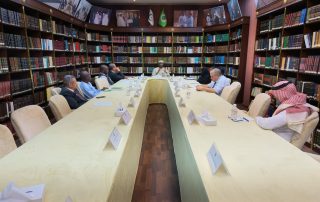
Secretary‑General of the Academy Visits the Consulate General of the Hashemite Kingdom of Jordan His Excellency Professor Dr. Qutb Mustafa Sano, Secretary‑General of the Academy, paid an official visit on 29 Sha‘ban 1447 AH, corresponding to 17 February 2026, to the Consulate General of the Hashemite Kingdom of Jordan in Jeddah. His Excellency and his accompanying delegation were received by His Excellency Ambassador Mohammed Salah Sobhi Hameed, Consul General and Permanent Representative of Jordan to the Organization of Islamic Cooperation, who welcomed him warmly and expressed his pleasure at the visit. He praised the distinguished intellectual efforts undertaken by the Academy under His Excellency’s leadership in addressing numerous religious and intellectual issues of concern to the Islamic world, affirming his personal honor in meeting His Excellency again and Jordan’s keenness to strengthen channels of communication and cooperation with the Academy, especially in areas of mutual interest. For his part, His Excellency expressed his deep gratitude and great appreciation to the Ambassador for the warm reception and generous hospitality. He commended the tremendous support, gracious care, and continuous attention the Academy has received from the leadership and people of Jordan since its establishment. He also conveyed his sincere appreciation for the Ambassador’s recent visit to the Academy, affirming the Academy’s full readiness to do everything that would enhance partnership, cooperation, coordination, and communication between the Academy and Jordanian religious and academic institutions. His Excellency was accompanied by Mr. Mohammed Al‑Mundhir Rida Al‑Shawk, Director of the Office and Protocol; Mr. Mohammed Waleed Al‑Idrisi, Director of Media and Public Relations; Ms. Sarah Amjad Badawi, Director of the Department of Family, Women, Children, and the Elderly; and Mr. Amjad Ibrahim Al‑Mansi, Head of the Protocol Section.

4 March، 2026|
Go to Top