
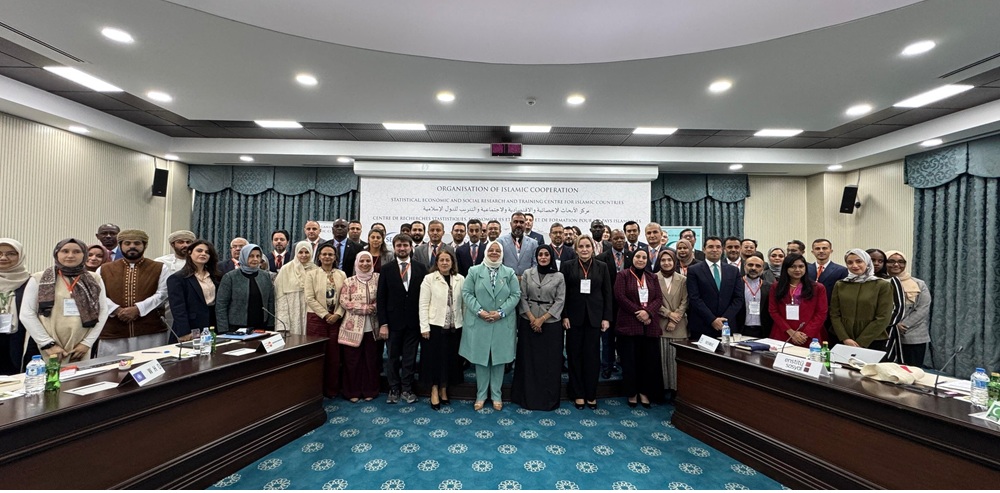
As part of the efforts of the Organisation of Islamic Cooperation (OIC) to enhance the protection of children from digital risks, Ms. Sarah bint Amjad Hussein Bedewi, Director of the Department of Family, Women, Children, and Elderly Affairs, participated in a workshop titled:
“Electronic Addiction: Best Practices for Protecting Children from Online Violence in OIC Member States”,
organized by the Statistical, Economic and Social Research and Training Centre for Islamic Countries (SESRIC) in cooperation with the General Secretariat of the OIC, held from 22–23 Rabi’ al-Thani 1447 AH (14–15 October 2025) in Ankara, Turkey.
The workshop aimed to strengthen cooperation and coordination among member states in the field of child protection from digital threats, exchange best practices in addressing electronic addiction and cyberbullying, and develop comprehensive child-centred strategies to ensure safe and responsible use of modern technology.
During the workshop, Ms Sarah Badiwi presented a paper titled: “The Importance of Islamic Values in Building a Balanced Personality Capable of Facing Digital Challenges”, in which she emphasised the essential role of value-based Islamic education in instilling moral and digital awareness among youth. This enables them to distinguish between positive and harmful content on the internet. She called for intensifying awareness programs targeted at children and youth regarding the safe and responsible use of technology.
She also stressed the importance of joint efforts among religious institutions, educational bodies, and digital content developers to produce safe, purposeful content that promotes Islamic values and helps protect young people from the dangers of cyberspace. Furthermore, she highlighted the need to involve families and communities in national and international efforts to safeguard children from digital harm.
It is worth noting that the Academy has issued several resolutions and recommendations related to protecting children from digital harm and empowering families to monitor and guide their children’s use of modern technology. Among the most notable are:
- Calling for clear regulations on internet use in schools and homes
- Providing educational and awareness programs that promote safe digital culture
- Encouraging educational institutions to incorporate digital literacy topics into their curricular
Read Also



Lastest