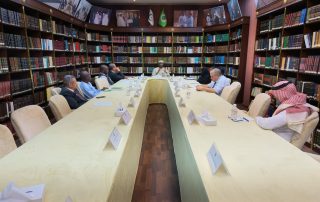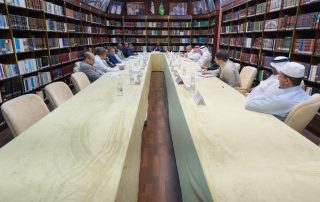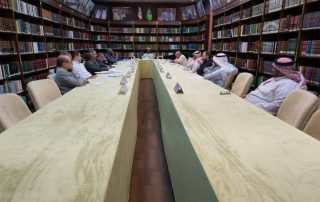
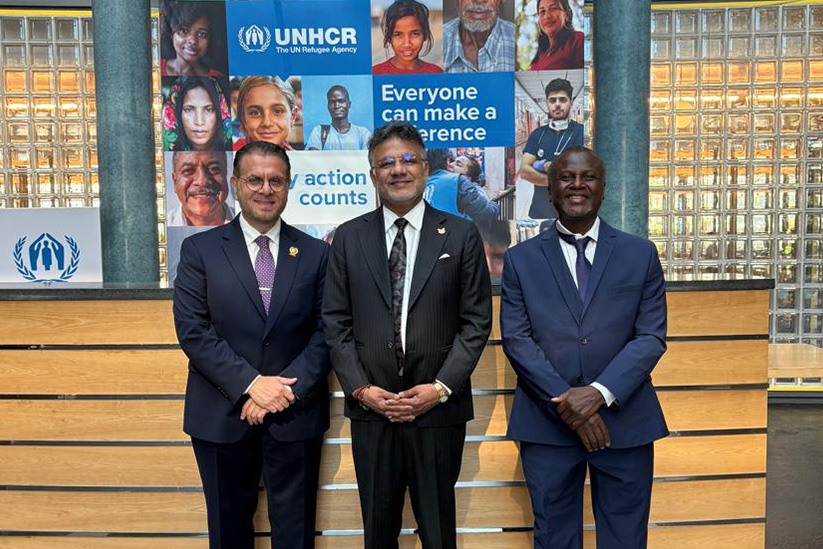
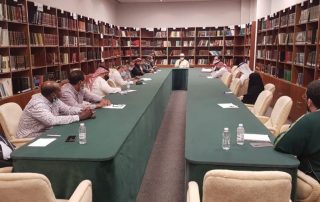
On behalf of His Excellency the Secretary-General of the Academy, Dr. Al-Hajj Manta Dramey, Director of Planning, participated in the meeting of the Multireligious Leaders Council (MRCL), held in Geneva on Tuesday, 28 July 2026, jointly organized by Religions for Peace and the United Nations High Commissioner for Refugees (UNHCR) at the UNHCR headquarters.
The meeting was co-chaired by His Excellency Mr. Barham Ahmed Saleh Qasim, United Nations High Commissioner for Refugees and former President of the Republic of Iraq, and His Excellency Dr. Francis Kuria Kagema, Secretary-General of Religions for Peace.
The meeting aimed to strengthen the role of religious leaders in addressing the challenges associated with forced displacement, explore prospects for cooperation, and discuss the concept of “Shared Sacred Prosperity”, coinciding with the 75th anniversary of the adoption of the Convention relating to the Status of Refugees.
During the meeting, the United Nations High Commissioner for Refugees and Religions for Peace announced their joint commitment to establishing the Multireligious Leaders Council to strengthen efforts to address the root causes of conflicts and displacement, support peacebuilding processes, and promote the values of inclusion and reconciliation.
The Council aims to build a global alliance in support of refugee protection amid the growing challenges facing the international system.
The High Commissioner, His Excellency Mr. Barham Saleh, stated: “Seventy-five years ago, the world made a commitment to protect everyone forced to flee, and our responsibility today is to keep this commitment alive for all generations.”
During the closed-door session that brought together members of the Multireligious Leaders Council, the United Nations High Commissioner for Refugees and the Secretary-General of Religions for Peace, Dr. Al-Hajj Manta Dramey highlighted the central role played by the International Islamic Fiqh Academy in promoting peace and interfaith dialogue, as well as in adopting a multilateral approach to addressing global issues.
He indicated that the Academy had signed more than 60 memoranda of understanding with academic and scientific institutions to promote inclusive dialogue and counter all forms of extremist thought.
He added:
“We have established cooperation partnerships with several United Nations institutions, including the United Nations Development Program (UNDP), the United Nations Relief and Works Agency for Palestine Refugees (UNRWA), and the International Organization for Migration (IOM), in order to highlight the role of Islamic charitable action and Islamic social finance in supporting humanitarian efforts.”
The meeting witnessed broad participation from religious leaders, humanitarian organizations and civil society institutions from different parts of the world, reaffirming the importance of interfaith and intercultural cooperation in addressing contemporary humanitarian challenges and promoting the values of peace and human dignity.
Read Also
Lastest